
How the delivery market will look in 5 years?
With billions in potential revenue on the line, third-party delivery providers are working more closely with restaurants and stores, to find better ways to process online orders.

Delivery is presenting to different market fields with one of the only ways to grow in a segment marred by fierce competition, tightening margins and labor shortages. Experts have found that consumers buy more food, grocers and clothes via delivery than they would in-store, and are increasingly demanding the service. But launching a delivery offering is no easy feat, experts say that restaurants, grocer stores and third-party providers are working together to better meet the needs of a growing on-demand economy.
"The customer has been trained through the retail experience to expect more convenient options at the doorstep," Jeremy Scott, Mizuho Americas' vice president of research.
Pizza brands like Domino's have been doing delivery since their inception and many already have robust delivery apps and fleets. Panera is also developing its own delivery strategy, while national brands such as Wendy's, Starbucks, Chick-fil-A, Chipotle, Taco Bell and KFC are working closely with third-party providers to beef up their delivery options.

Millennials, in particular, make up the largest demographic using delivery apps and websites, according to research from Zion & Zion.
"As millennials gain a share of the wallets, they are much more inclined to take advantage of the convenience," Scott said.
With more millennials reaching their 30s and starting families, delivery can be an ideal option, especially as this demographic becomes short on time.
"There is a growing need for time, a growing need for convenience, and delivery solves a lot of those problems for [millennials]," Scott said.
Delivery also could solve slumping same-store sales many restaurant and store chains have been facing. While delivery only makes up about 3% of the restaurant business, it’s growing, Laura Chadwick, National Restaurant Association director of membership engagement, technology and data security.
"There is a growing need for time, a growing need for convenience, and delivery solves a lot of these problems for [millennials]."
Jeremy Scott
Vice President of Research, Mizuho Americas

"[Delivery] is the only component that is growing," Chadwick said. "It is eating into in-person dining, and it's eating into take out and drive-thru."
How much the segment will grow varies by analyst, however. Statista, which measured about $18 billion in online food delivery revenue for 2019 anticipates the segment to grow to $24 billion by 2023. Compared to restaurant-to-consumer revenue, which accounts for $16 billion of the online food delivery market, platform-to-consumer revenue makes up nearly $2 billion, which Statista anticipates will grow to about $3 billion in 2023. Morgan Stanley projects that a much bigger portion of total restaurant sales will go to online delivery — roughly 40% or $220 billion by 2020.
Delivery comes with challenges
Regardless of the potential revenue numbers, restaurants are grappling with how to meet this consumer demand and take full advantage of its additional revenue stream.
But delivery isn't without obstacles. There are ongoing concerns, for example, that third-party services are undermining the traditional relationship between restaurants and their customers, taking away the direct interaction customers have with restaurants, Chadwick said.
Third-party delivery fees are another concern. Chadwick said she anticipates more restaurants will develop their own delivery programs to avoid paying a delivery partner, such as Uber Eats, 30% per order. Other brands reportedly charge 12% to 24% per order, according to Food & Wine.
"Thirty percent per order is a margin crusher," Chadwick said.
Other concerns the food quality once the food is delivered. Several fast food chains have been grappling with how to deal with soggy fries, for example.
But the biggest hurdle for restaurants and delivery services is integrating with point-of-sale systems, Scott said. Many restaurants have been left with tablet farms with so many different providers having different systems to process their orders, Chadwick said. In 2017, NCR partnered with Grubhub and DoorDash to try and eliminate the need for separate tablets.

Integration will be necessary to make delivery a success for both restaurants and third-party providers, Scott said. That means instead of being processed through a tablet, the orders would just be sent to the back of the house as if it were a regular order.
"Eventually you're going to have to have everything flow to the back of the house if you want [delivery] to be efficient," Scott said.
At the end of the day, restaurants want a third-party system that makes sure the food quality is good, the driver goes through the best route, there is a well-trained driver and there is a way to communicate with the driver, Scott said.
A handful of brands simply aren't bothering with delivery, especially some casual chains, instead, focusing on improving other aspects of their business. Olive Garden tested third-party delivery, but decided to forgo it, choosing to improve its takeout and dine-in experience. Texas Roadhouse has long been against delivery with its CEO Kent Taylor telling investors in 2017 that it slows dine-in service, stretches kitchen staff, take-out orders make more sense since customers can still have interactions with staff and food quality isn't always as good as dine-in. This stance makes sense, Chadwick suggested, since steak and other menu items found at fine dining establishments don’t deliver well.
The impact on major chains
As Grubhub, Uber Eats and DoorDash expand their partnerships with national brands, these chains have begun posting improved sales.
Delivery is helping Wendy’s increase brand awareness and improve sales, for example. Average check sizes have been 1.5 to two times higher on delivery orders and customer satisfaction has been high, Wendy's executives said during the fast food chain’s most recent earning’s call.
The chain, which works exclusively with DoorDash, continues to roll-out delivery, which was at 50% penetration in North America by the end of the third quarter with expectations to reach 60% by the end of 2018, since franchisees are demanding to have delivery. Wendy’s also has been working with DoorDash to integrate its technology to the chain’s mobile app to allow for additional ways for customers to order.

Chipotle, which began partnering with DoorDash last year, has been increasingly marketing its delivery capabilities, offering free delivery during the college football bowl season. In May, it reported a nearly 700% increase in delivery orders.
App downloads increased 25% during the third quarter and the chain has averaged delivery times to under 30 minutes, executives said during a recent earnings call. It also has been testing drive-up windows for guests picking up digital orders and plans to roll this out to more restaurants this year.
Starbucks will bulk up its delivery options as well, expanding it to 2,000 U.S. stores through a partnership with Uber Eats. Its rollout began in January with delivery heading to San Francisco, Boston, Chicago, Los Angeles, New York and Washington D.C.
Delivery in the next 5 years
The next five years for delivery will look a little different than delivery’s early days. Right now, the delivery market also is still in a novelty stage, where customers are paying for the experience, Scott said. As customers move into the stage of knowing that this is something that they want, they’re going to start influencing pricing based on what they are willing to pay for the service. The market will eventually get to the price discovery stage where delivery companies will start to impact how much a customer is paying per order and adjust fees, he said.
Within the next few years, the industry also will undergo consolidation leading to two to three primary providers, Scott said. Three may even be too much for the industry, he said. Eventually all the new providers will either be acquired or lose market share until they are no longer valuable, he said.
This has already happened in the UK with Amazon Restaurants folding its operations in London because it couldn't be competitive. Just Eat is starting to feel the pressure of its competitors as well, as it’s under pressure to improve revenue. In the U.S., Grubhub bought Seamless in 2013 and Eat24 in 2017, and Waitr bought Bite Squad last year, allowing both to grow into new markets quickly.
Delivery providers also will have more technological tools to help with delivery. DoorDash is testing autonomous vehicle delivery in San Francisco while Postmates is testing bot delivery in Los Angeles, for example.
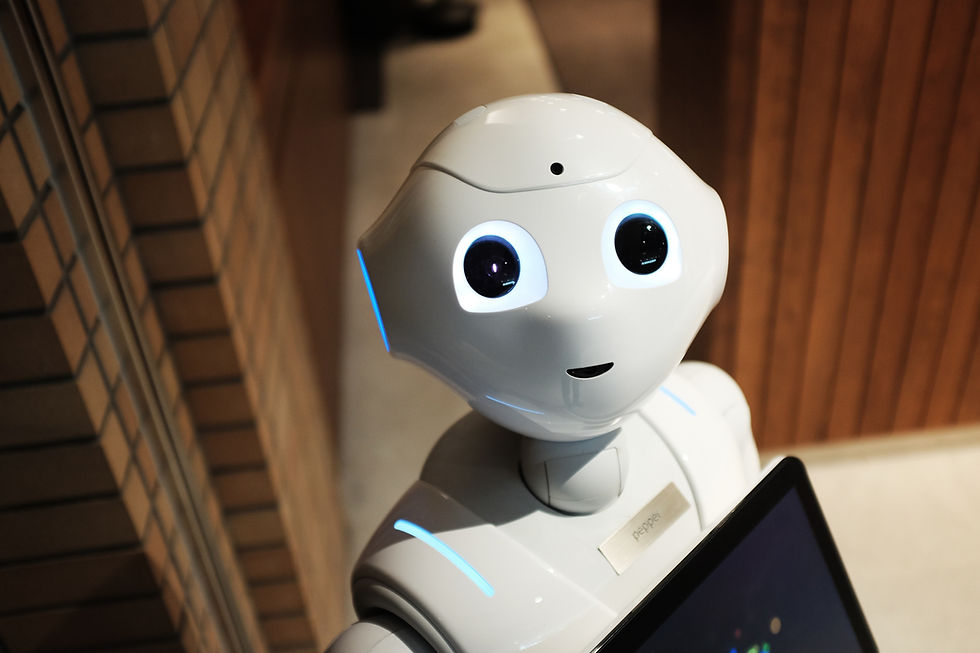
Drones and bot delivery will also become a more integrated technology, especially since it will open up a new area: small order delivery.
"It improves the economics of small order delivery and unlocks new customers and a lower price point," Scott said.
With drivers, it typically costs about $5 to deliver, but with bots, the cost would be about $1 per trip — making small orders and value-menu ordering more viable, Scott said.
With bots and humans, companies will be able to use an algorithmic approach to develop a radius, offer a smaller minimum order fee and higher frequency of orders. Several tech companies have been testing ways to deliver meals and snacks across college campuses, which create ideal testing grounds that don’t require the same regulations from cities to use sidewalks.
Better driving algorithms also can make trips more productive so that drivers aren't sitting around waiting for orders to be ready. Uber Eats' interface is easy to use and it set the bar really high, especially since it has GPS where customers can track their drivers, Scott said. Other apps like Grubhub don't always have GPS integration, especially since a lot of restaurants are delivering the food themselves, Scott said.
Pick-up shelves also are being tested at various restaurants to allow for better flow of delivery drivers to pick up orders without disrupting or adding to the line of dine-in customers.

Eatsa is testing smart pick-up shelves at several restaurants in California.
Globe Newswire / Eatsa
How exactly these technologies will evolve will likely depend more on the needs of restaurants than what customers want.
"I think it’s going to be a lot on how the restaurant industry is evolving as opposed to how delivery business is evolving," Grubhub's DeWitt said.
Five years from now, DeWitt anticipates his company will be more integrated with restaurant technology, and that Grubhub will have more of a national focus as it builds up its restaurant network to reach 90% of markets in the U.S.
DoorDash's Espinosa said he expects restaurants to enhance operations to better deal with the on-demand economy, be that better inventory control or different store formats that work better with the growing convenience economy.
"Twenty years from now, we'll look back and think how silly it was that we waited two days … for a book or groceries," Espinosa said. "Everything will be two hours or less."
Correction: In a previous version of this article, Chick-fil-A's partnership with DoorDash was misidentified. DoorDash partners with brands such as Chipotle and Denny's on its Drive platform.
Autor: Julie Littman / @julie_littman


Comments